



















































































































































































Nikon Z8 Overview
Compact, Lightweight, Powerful
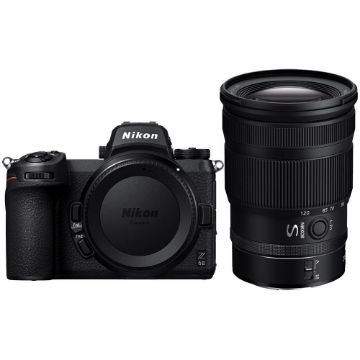
Built using flagship DNA, the Nikon Z8 is a compact, lightweight camera housing much of the technology from the Z9 but in a sleeker, more portable package. Dubbed the ultimate hybrid camera, the Z8 features the same proven sensor, processing, and AF capabilities of the flagship with a new body design that better suits gimbal use, event shooting, and other handheld applications.

Featuring the same sensor that debuted in the Z9, the FX-format 45.7MP BSI stacked CMOS sensor offers a useful combination of resolution, fast readout speeds, impressive clarity, and minimal noise. The stacked design contributes to reduced rolling shutter while the BSI designation ensures improved noise levels when working at the top end of the extended ISO 32-102400 range. Also, the 45.7MP resolution and full-frame sensor size hit a sweet spot that benefits photographers working in detail-oriented genres as well as enables recording video at resolutions up to 8K.
Complementing the sensor is the EXPEED 7 processing engine, which offers speeds approximately 10x faster than a Z7 II. This engine works in conjunction with the stacked sensor design to realize impressively fast AF speeds, burst shooting rates, a high buffer capacity, fluid video performance, and quick all-around handling.

- Top continuous shooting speeds of 20 fps when shooting in raw, 30 fps when shooting in JPEG, 60 fps when shooting 19MP JPEGs using a DX area, and an impressive 120 fps shooting rate when recording 11MP stills, with all rates supporting full AF/AE performance.
- Able to buffer over 1000 raw images in a burst, meaning raw image sequences can be recorded for approximately 50 seconds continuously. Also, during playback, you can skip to the first shot of a given burst to expedite the on-camera review process.

- Pre-Release Capture helps make decisive moment shots easier by recording frames in a burst for up a second prior to actually releasing the shutter. When this feature is activated, burst shooting will commence when the shutter is half-pressed and the buffer will retain up to a second's worth of frames prior to fully pressing the shutter.
- Electronic shutter affords a top shutter speed of 1/32,000 sec for working in the brightest conditions with wider apertures.

- Stacked sensor design reduces rolling shutter distortion so fast-moving subjects, like a golf club, tennis racket, or baseball bat, do not appear distorted when working with shutter speeds up to 1/32,000 sec.
- AF calculations are done at a 120 fps rate to keep up with fast continuous shooting speeds.
- High Efficiency RAW file format maintains image quality akin to uncompressed raw files but with file sizes approximately 30% smaller for faster reading/writing to the memory card.
- Stills can also be saved in the HEIF file format; a useful evolution from JPEG, this 10-bit format offers 1 billion more colors for greater realism and dynamic range when viewed on HLG-compatible displays while still retaining the small file size as a JPEG.
- Motion Blend Retouch feature can be used to produce an in-camera composite that depicts a series of subject movements within a single frame.
- Long Exposure display includes a live exposure timer on the rear LCD, along with the ability to dim the viewfinder to better preserve your night-adjusted vision.

By removing the mechanical shutter, the Z8 can also operate completely silently and there is no worry over mechanical shutter wear or breakdown. A shutter release sound can be added for awareness when a photo is being taken, and the volume can be adjusted to suit different working scenarios.

- Fine-tune hue and brightness while shooting for more precise control while shooting.
- Skin softening can be used on up to three subjects in a shot and slightly blurs the skin for a more pleasing texture while still retaining essential sharpness on eyes and hair.
- Manual white balance control is more intuitive when making adjustments and Auto WB has also been optimized for human subjects.
Covering the full sensor area, the Z8 uses the flagship 493-point phase-detection AF system to realize fast and accurate focusing performance. This system is benefitted by the high-speed communication of the Z interface along with the speed of the sensor that enables AF readings to occur at up to 120 fps.

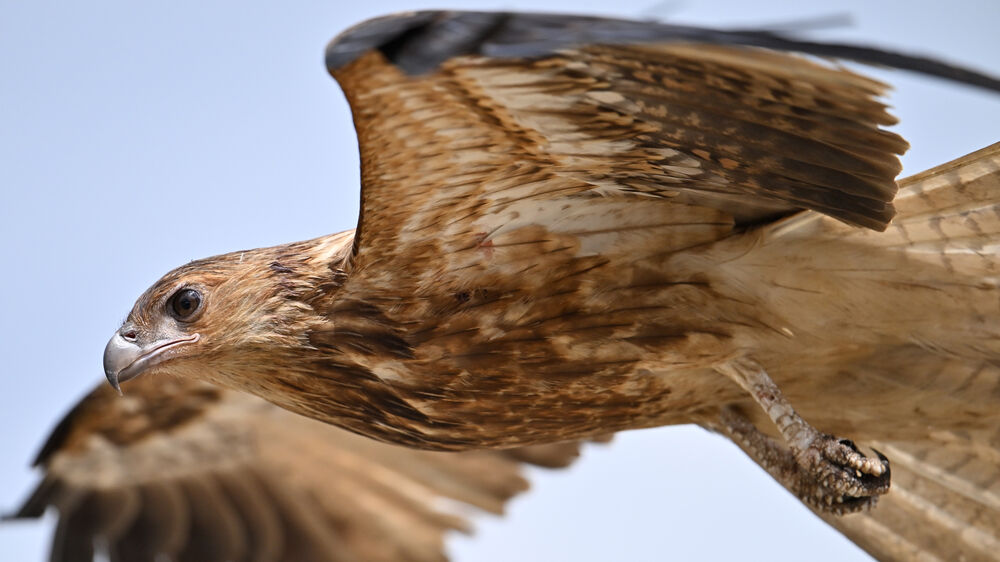

Utilizing inherited algorithms and deep learning technology from the Z9, including sophisticated Subject Detection, the Z8 can recognize a variety of distinct subject types, ranging from humans to animals to airplanes to bicycles. When working in Auto-Area AF, these subjects will automatically be detected, focused on, and tracked to ensure sharp focus when the subject is moving across the frame.
Eye-Detection AF, specifically, has been tuned for improved accuracy and refined recognition of eyes in the scene, regardless of how small or large they are within the image frame, and can also be used in conjunction with custom Wide-Area AF for different subject shapes and sizes.
Equally capable for video, the Z8 matches the Z9's recording capabilities here, as well, with a variety of resolutions and frame rates available up to 8K. Using full pixel readout, UHD 8K 30p video can be recorded with continuous shooting possible for approximately 2 hours 5 minutes.
UHD 4K and Full HD recording is also possible in a variety of frame rates, including full-frame 4K recording at up to 120p for slow-motion playback. Using an 8K area, oversampled UHD 4K recording is possible at up to 60p for increased sharpness and detail. Also, high-resolution frame grabs can be recorded in camera from 8K and 4K videos, for producing 33MP or 11MP stills, respectively.
Internal 12-bit raw recording at up to 8.3K 60p in the N-RAW format is supported along with internal ProRES RAW HQ. Raw recording offers greater tonal and color latitude and can improve dynamic range, benefitting color grading needs and post-production flexibility.
- N-RAW is Nikon's own raw recording format that offers impressively small file sizes compared to other raw formats as well as the ability to create MP4 proxies for more efficient previewing or transferring.
- N-RAW recording is available at up to 8.3K at 60p or 24p; 4.1K at up to 120p; 5.3K at up to 60p with a 1.5x crop; and 3.8K at 120p with a 2.3x crop.
- ProRes RAW recording is also available at up to 4.1K and 60p.
Internal recording is also supported with 10-bit color and 4:2:2 sampling in the ProRes 422 HQ and H.265 codecs, and H.264 and 4:2:0 color can be used depending on workflow needs. For more latitude when color grading in post, there is also a 10-bit N-Log setting as well as a Flat color profile. Additionally, HLG (Hybrid Log Gamma) can be used for creating HDR-ready content straight from the camera.
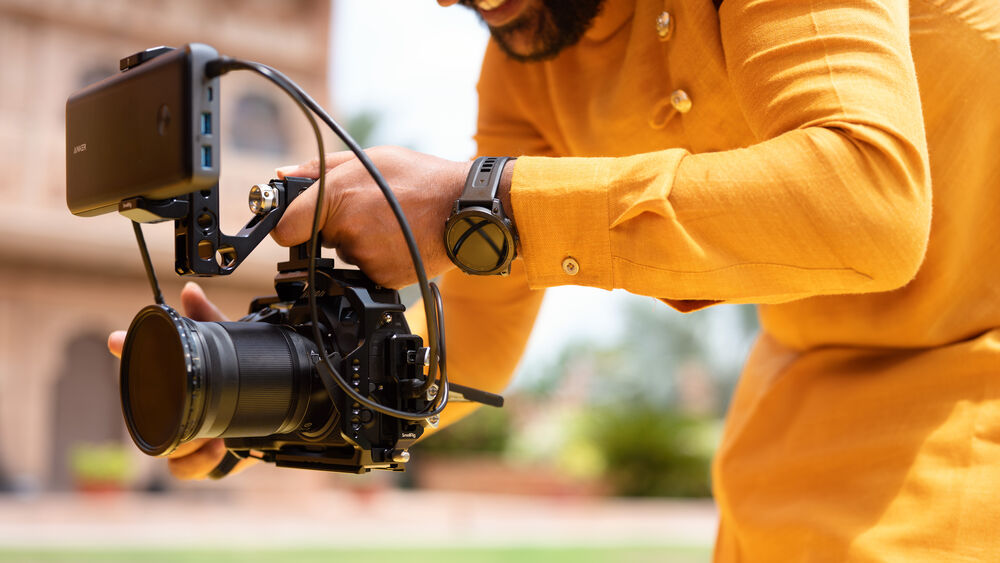
- Red REC frame indicator on EVF and LCD during recording to easily recognize when recording is being captured.
- Dedicated video info display indicates various recording settings, such as frame size, frame rate, audio settings, codec, bit depth, and HDMI output settings. Some of these settings will also be visible on the camera's top control panel.
- Focus peaking and zebra stripes are visual aids to help achieve sharp focus and accurate exposure.
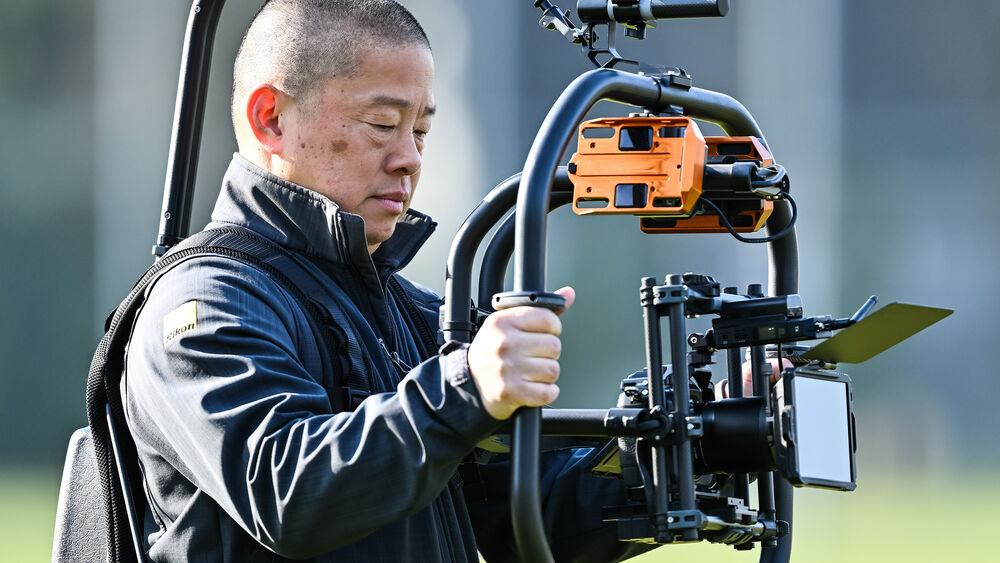
- Waveform monitor for realtime exposure analysis.
- Fine ISO control in Manual mode for adjusting exposure in 1/6-stop increments.
- Fast AF-ON function can be assigned to Fn buttons; it is now possible to assign two different AF speeds to different buttons.
- Slow shutter speed video is supported, slower than 1/frame rate, for working in extreme low-light conditions or for creating intentionally blurred effects.
- Timecode linking is possible when working with an optional timecode generator.
- Complementing the video capabilities, the Z8 also supports 24-bit linear PCM sound recording and offers compatibility with external XLR microphones via the optional Tascam CA-XLR2d-AN digital adapter.

- Deemed the true successor to the D850 DSLR and the smaller follow-up to the flagship Z9, the Z8 hits a sweet spot in terms of size and performance. It is 30% smaller than the Z9 and 15% smaller than the D850.
- Compared to the Z9, with its built-in vertical grip, the Z8 takes on a more modular design, allowing you to keep it small for day-to-day shooting or pair it with the optional MB-N12 Power Battery Pack grip for improved ergonomics when shooting vertical and better battery life. Also, the smaller, lighter design makes the Z8 an ideal candidate for rigging or use on a gimbal for video use.
- Dual card slots—one CFexpress Type B slot and one UHS-II SD slot—allow for flexible file saving. The CFx slot is suitable for data-intensive applications, like 8K recording and high-speed burst shooting, while the SD slot retains compatibility with the popular storage format. Additionally, the CFx B slot is also compatible with XQD memory cards.
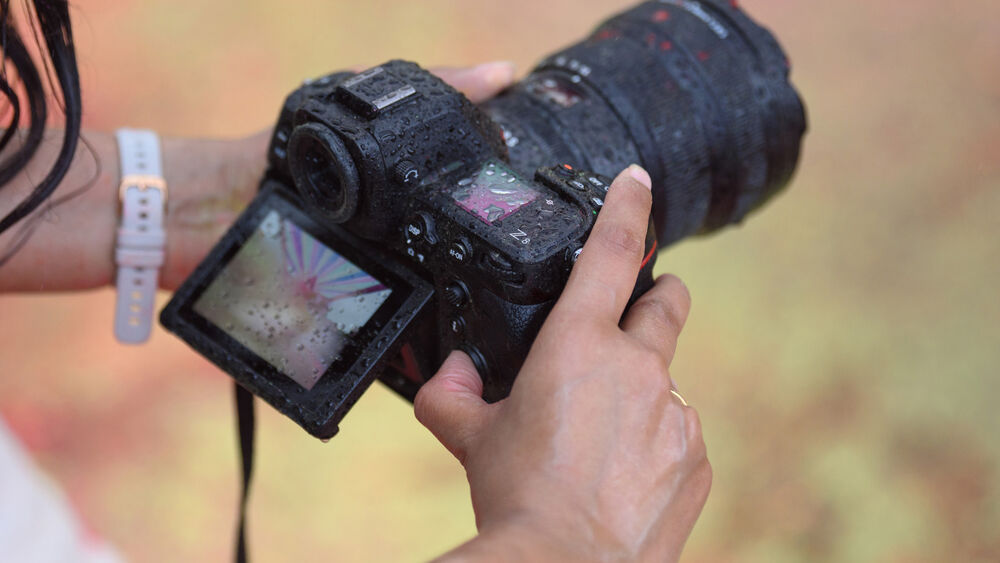
- Built using eco-friendly Seerebo carbon fiber and robust magnesium alloy, the Z8 manages to be both durable and lightweight, weighing just 2 lb.
- Premium weather sealing protects against dust and moisture for confident use in harsh climates.
- Included EN-EL15c battery offers approximately 340 frames per charge when primarily using the viewfinder or 370 shots per charge when primarily using the LCD monitor. The Z8 is also compatible with other EN-EL15-series batteries.
- In-body Vibration Reduction now supports Synchro VR to achieve up to 6 stops of camera shake compensation when used with select Z lenses.
- Helping to cut down on dust reaching the sensor, the Z8 incorporates a sensor shield that protects the sensor surface when changing lenses. For additional dust prevention, there is also a dual electro-conductive and fluorine coating on the optical filter covering the sensor.
- Backlit buttons offer easier navigation and button recognition when working in low-light conditions.
- Real-Live Viewfinder is an advanced EVF utilizing a 3.69m-dot OLED panel with adjustable luminance up to 3000 cd/m2 for clear visibility in bright conditions. This EVF also works in conjunction with dual-stream technology for blackout-free viewing when shooting continuously and it features a high fps function, which ups the EVF's refresh rate to 120 fps for smoother, lifelike viewing.
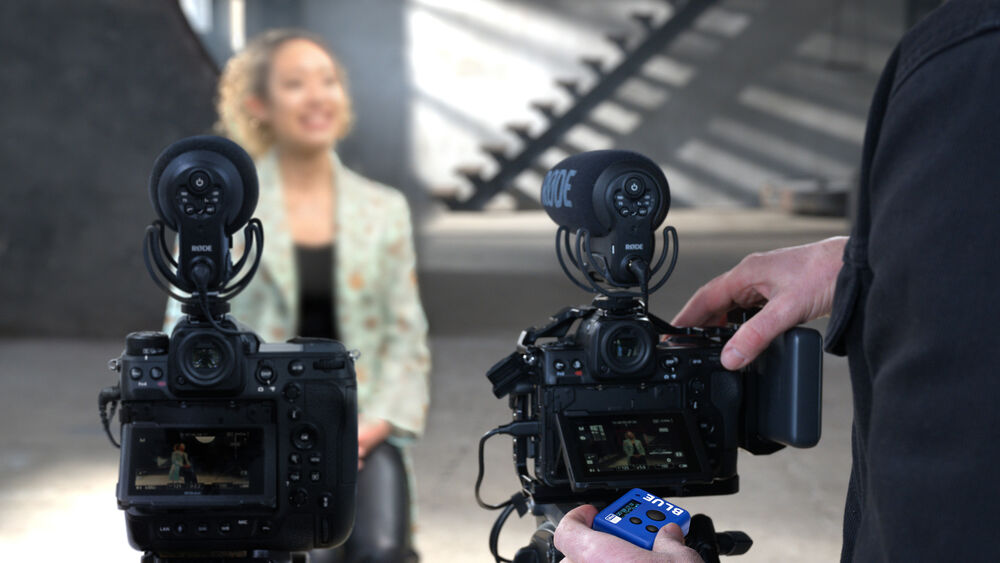
- Like the Z9, the Z8 incorporates a unique 3.2" 2.1m-dot four-axis tilting touchscreen LCD that better supports working from high and low angles, regardless if shooting in the horizontal or vertical orientation. This screen's four-way tilting design allows for easier viewing from a variety of positions and the user interface orientation will also shift depending on how the camera is held.
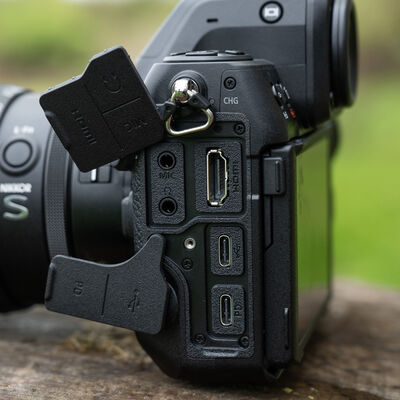
- Full-size HDMI port for outputting video to an external recorder or monitor
- 3.5mm headphone and microphone ports for attaching an external microphone and for on-board audio monitoring
- Two USB-C ports: one supports file transfers and tethering and the second is dedicated to power delivery and battery charging
- USB-C communication terminal supports USB-LAN connectivity when paired with an optional USB-C to Ethernet adapter. This enables a 1000BASE-T wired LAN connection for transferring files over FTP
- 10-pin port offers wide accessories and remote connectivity
- Bluetooth and Wi-Fi (2.4 and 5 GHz) permit wireless transferring of files, remote camera control via a mobile device, and works in conjunction with the NX Mobile Air app for file management
Nikon NIKKOR Z 24-70mm f/4 S Overview
Covering a useful range of focal lengths, the NIKKOR Z 24-70mm f/4 S is a versatile zoom, spanning wide-angle to portrait-length perspectives. Its constant f/4 maximum aperture maintains a consistent exposure throughout the zoom range and also helps to realize a more compact and lightweight alternative to an f/2.8 zoom. In regard to the optical design, a unique aspherical extra-low dispersion element, in addition to three aspherical elements, is used to help reduce chromatic aberrations and distortions throughout the zoom range in order to achieve high image sharpness and clarity. Both Nano Crystal and Super Integrated Coatings have also been applied to control flare and ghosting for greater contrast and color rendering in bright and backlit conditions.
Complementing the optics, a stepping motor provides quick, quiet, and precise autofocus performance along with full-time manual focus override to suit both stills and video applications. A programmable control ring can be set for intuitive adjustment over a variety of camera and exposure settings. Additionally, the lens has a button-less retractable barrel to realize a more compact form factor when not in use.
More From Same Category
Nikon Z7 Mirrorless Camera (Body Only)
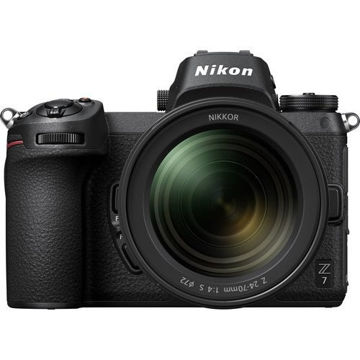
Nikon Z7 Mirrorless Camera with 24-70mm Lens
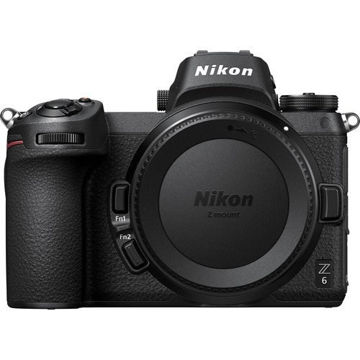
Nikon Z6 Mirrorless Camera (Body Only) with FTZ Adapter
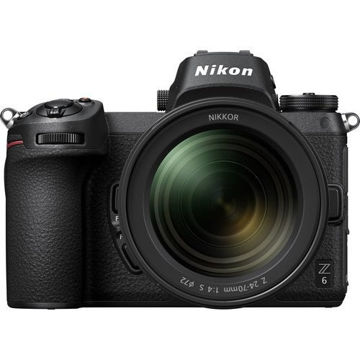
Nikon Z6 Mirrorless Camera with 24-70mm Lens & FTZ Adapter
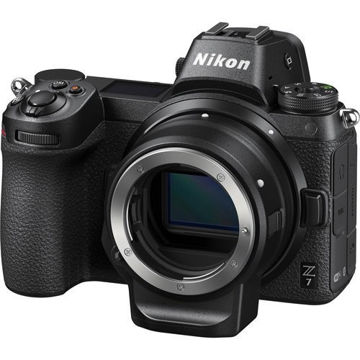
Nikon Z7 Mirrorless Camera with FTZ Mount Adapter Kit
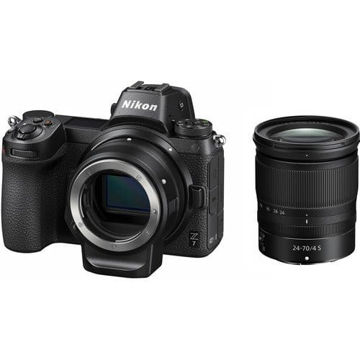
Nikon Z7 Mirrorless Camera with 24-70mm Lens and FTZ Adapter Kit
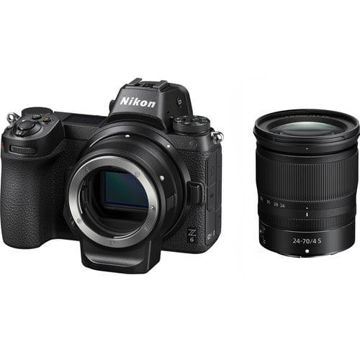
Nikon Z6 Mirrorless Digital Camera with 24-70mm Lens and FTZ Mount Adapter Kit
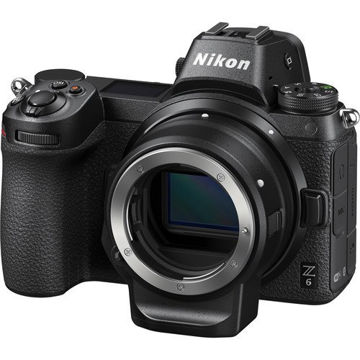
Nikon Z6 Mirrorless Digital Camera with FTZ Mount Adapter Kit
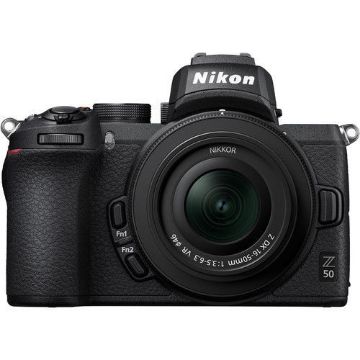
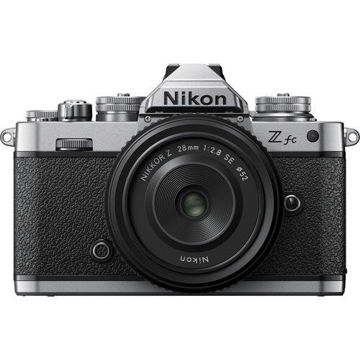
Nikon Z fc Mirrorless Camera with 28mm (SE) Lens
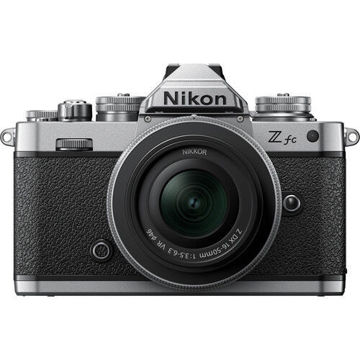
Nikon Z fc Mirrorless Camera with 16-50mm Lens
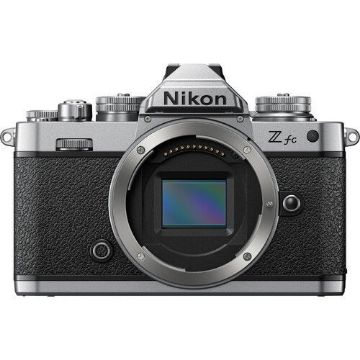
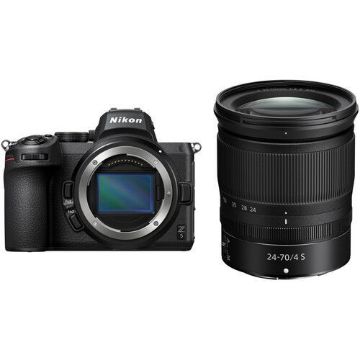
Nikon Z5 24-70mm f/4 S Mirrorless Camera Kit with Extra Battery (EN-EL15C)
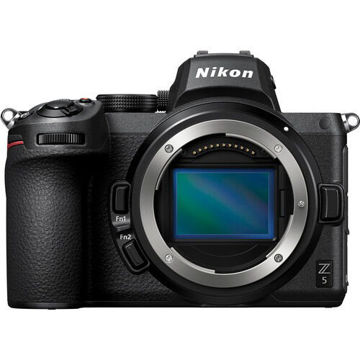
Nikon Z5 Mirrorless Camera (Body Only)
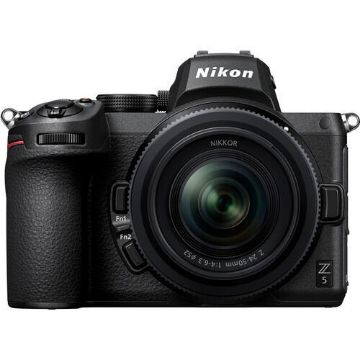
Nikon Z5 24-50mm Mirrorless Camera Kit with Extra Battery (EN-EL15C)
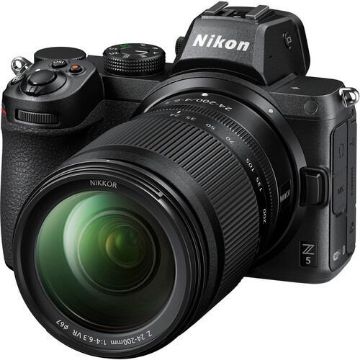
Nikon Z5 Mirrorless Camera with 24-200mm Lens with Extra Battery (EN-EL15c)
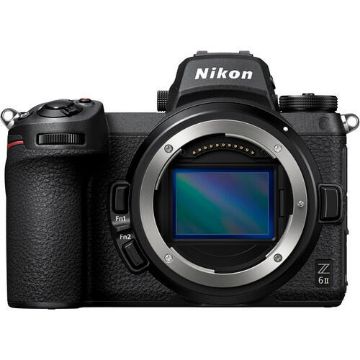
Nikon Z6 II Mirrorless Camera Body Only with Extra Battery (EN-EL15C)
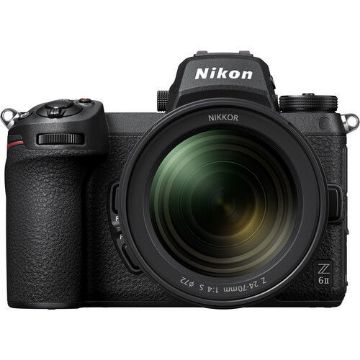
Nikon Z6 II 24-70mm f/4 S Mirrorless Camera Kit with Extra Battery (EN-EL15C)
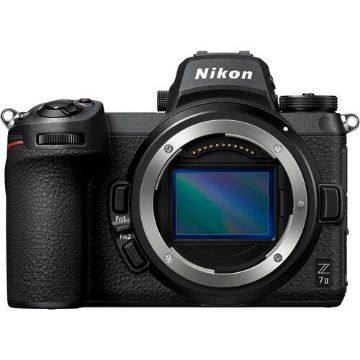
Nikon Z7 II Mirrorless Camera Body Only with Extra Battery (EN-EL15C)
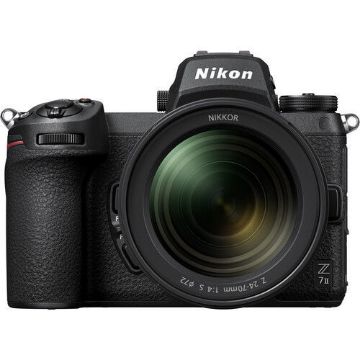
Nikon Z7 II 24-70mm f/4 S Mirrorless Camera Kit with Extra Battery (EN-EL15C)
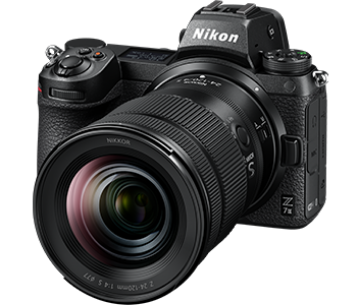
Nikon Z7 II 24-120mm f/4 S Mirrorless Camera Kit with Extra Battery (EN-EL15C)
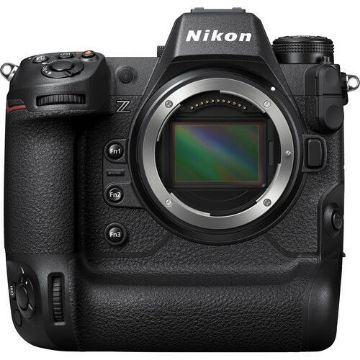
Nikon Z9 Mirrorless Camera (Body Only) with Freebies
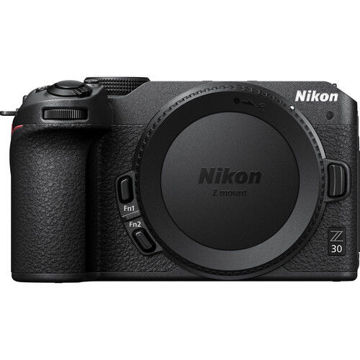
Nikon Z30 Mirrorless Camera Body Only
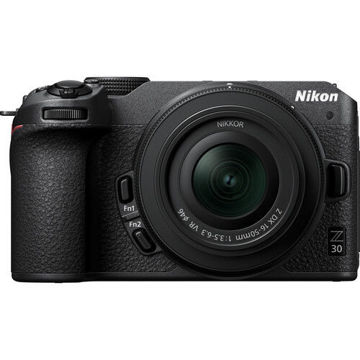
Nikon Z30 Mirrorless Camera with 16-50mm Lens
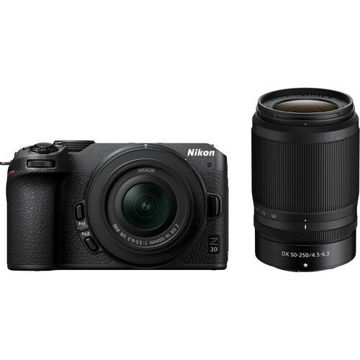
Nikon Z30 Mirrorless Camera with 16-50mm and 50-250mm Lenses
Nikon Z30 Mirrorless Camera with 18-140mm Lens
Nikon Z50 Mirrorless Camera Body Only with Free EN-EL25 Battery
Nikon Z50 Mirrorless Camera with 18-140mm Lens
Nikon Zfc 18-140mm Mirrorless Camera Kit with Extra Battery (EN-EL25)
Nikon Z5 Mirrorless Camera with 24-120mm F/4 S Lens + Extra Battery
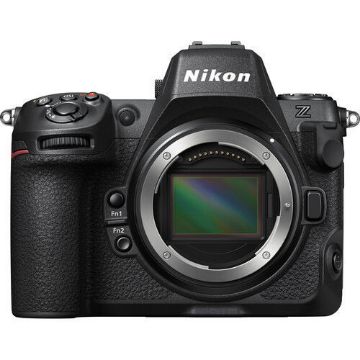
Nikon Z8 Mirrorless Camera (Body Only) With Free Nikon EN-EL15C Battery
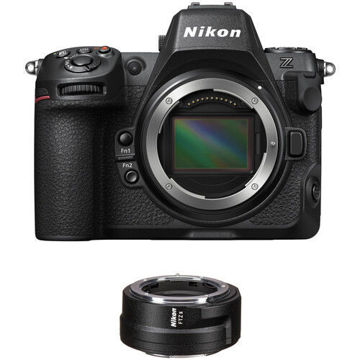
Nikon Z8 Mirrorless Camera with FTZ II Adapter Kit
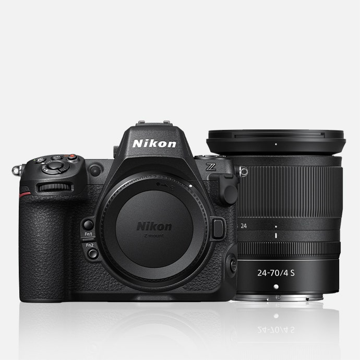
Nikon Z8 Mirrorless Camera with 24-70mm f/4 S Lens
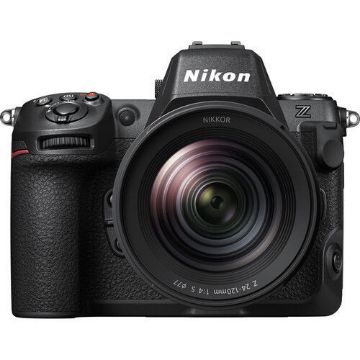
Nikon Z8 Mirrorless Camera with 24-120mm f/4 Lens + Extra Battery
Nikon Z6 II Mirrorless Camera with 28-75mm f/2.8 Lens with Extra Battery (EN-EL15C)
Nikon Zf Mirrorless Camera (Body Only)
Nikon Zf Mirrorless Camera with 24-70mm f/4 Lens + Extra Battery & SD Card
Nikon Zf Mirrorless Camera with 40mm Lens
Nikon Zf Mirrorless Camera with 24-120mm f/4 s Lens + Extra Battery + SD Card
Nikon Zf Mirrorless Camera with 28-75mm f2.8 Lens
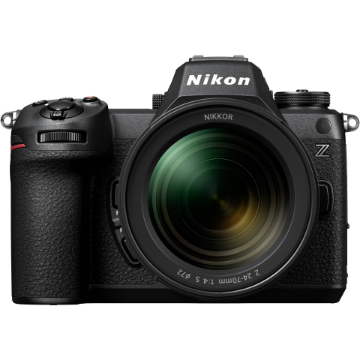
Nikon Z6 III Mirrorless Camera with 24-70mm f/4 S Lens
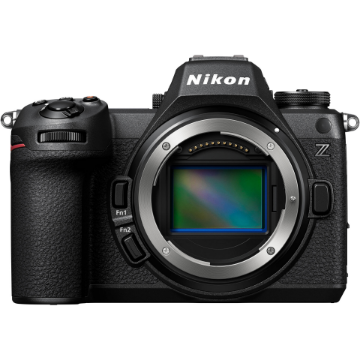
Nikon Z6 III Mirrorless Camera (Body Only)
Nikon Z6 III Mirrorless Camera with 24-120mm f/4 S Lens
Nikon Z6 III Mirrorless Camera with 24-200mm f/4-6.3 VR Lens
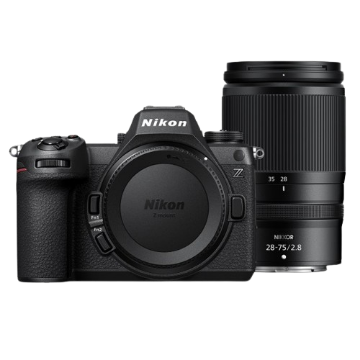
Nikon Z6 III Mirrorless Camera with 28-75mm f/2.8 Lens
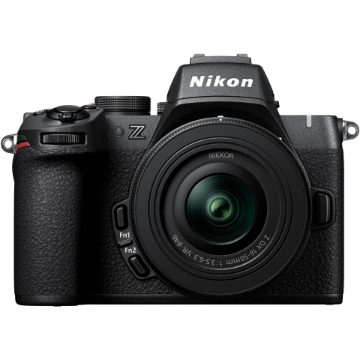
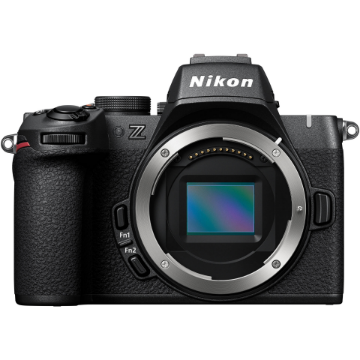
Nikon Z50 II Mirrorless Camera (Body Only) with Free Battery Charger
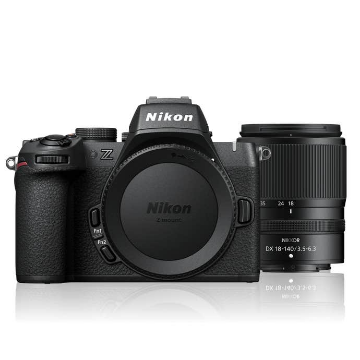
Nikon Z50 II Mirrorless Camera with 18-140mm Lens with Free Battery Charger
Nikon Z5 II Mirrorless Camera with 24-200mm f/4-6.3 Lens
Nikon Z5 II Mirrorless Camera with 24-120mm f/4 S Lens
Nikon Z5 II Mirrorless Camera with 24-70mm f/4 S Lens
Nikon Z5 II Mirrorless Camera with 24-50mm f/4-6.3 Lens
Nikon Z5 II Mirrorless Camera (Body Only)
Nikon Z50 II Mirrorless Camera with 12-28mm f/3.5-5.6 Lens With Free Battery Charger
Nikon ZR 6K Cinema Camera (Body Only)
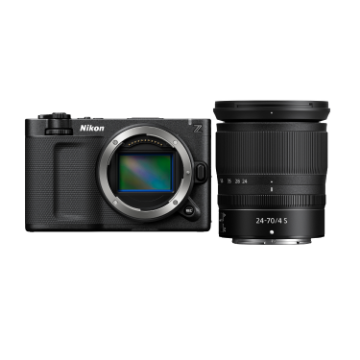
Nikon ZR 6K Cinema Camera With 24-70MM F/4 S Lens
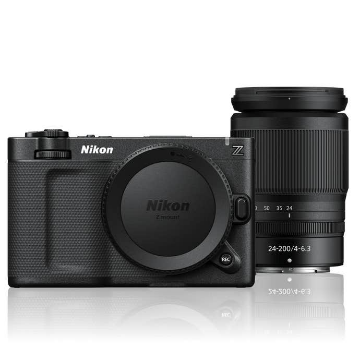
Nikon ZR 6K Cinema Camera With 24-200mm f/4-6.3 VR Lens
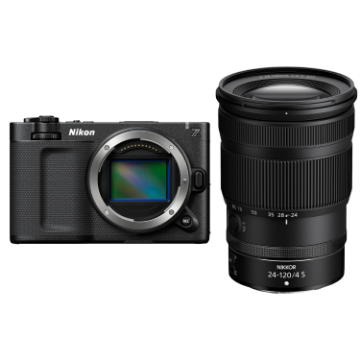
Nikon ZR 6K Cinema Camera With 24-120MM F/4 S Lens
Nikon Z8 Mirrorless Camera with 24-70mm f/4 S Lens
Also see: Nikon Z8 Body | Nikon Z8 24-120mm | Nikon Z8 FTZ II
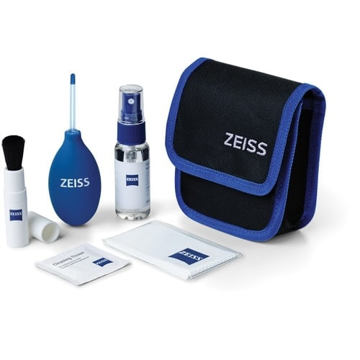
ZEISS Lens Cleaning Kit
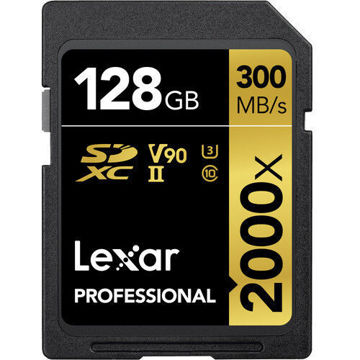
Lexar 128GB Professional 2000x UHS-II SDXC Memory Card
Nikon Z30 Mirrorless Camera with 16-50mm Lens
Also see: Nikon Z30 Body Only | Nikon Z30 16-50mm & 50-250mm | Nikon Z30 18-140mm
Nikon Z7 II 24-70mm f/4 S Mirrorless Camera Kit with Extra Battery (EN-EL15C)
Nikon Zfc 18-140mm Mirrorless Camera Kit with Extra Battery (EN-EL25)